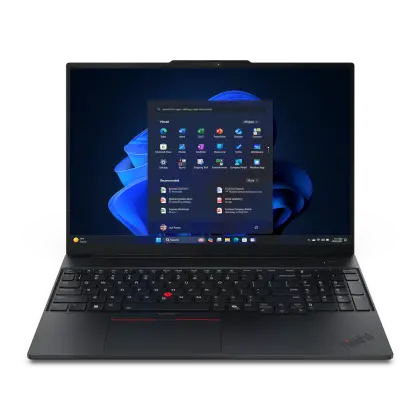
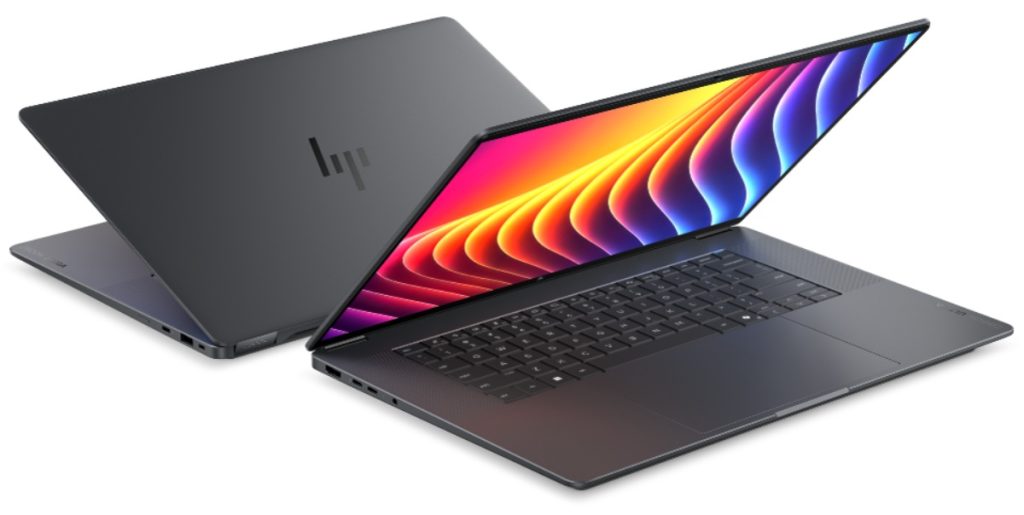
The HP ZBook Ultra G3a 16 pairs AMD's groundbreaking Ryzen AI Max+ PRO processor with a stunning 16-inch display, creating an elite mobile workstation built for unprecedented local artificial intelligence workloads and creative computing.
Introduction
For years, mobile workstation engineers and creative professionals have faced a frustrating compromise: either tether their heavy artificial intelligence compute workflows to remote cloud servers or lug around monstrous, heat-spewing desktop-replacement laptops with battery lives measured in minutes. With the launch of the HP ZBook Ultra G3a 16″ mobile workstation in India, HP and AMD have rewritten the playbook. Powered by AMD’s cutting-edge Ryzen AI Max+ PRO processor family—built upon the highly anticipated 'Strix Halo' architecture—this machine is engineered from the silicon up to process sophisticated machine learning models, 3D environments, and high-bitrate video streams entirely offline. It resolves critical pain points surrounding enterprise data privacy, latency bottlenecks, and runaway cloud API billing by democratizing local artificial intelligence execution directly on your desk or lap. At Choosya, we dissected every millimeter of this workstation to determine whether it truly fulfills its promise of being the premier local AI computing powerhouse for modern engineers, researchers, and studio creators.
Design and Build Quality
Holding the HP ZBook Ultra G3a 16 immediately conveys its status as an elite enterprise device. Constructed from precision CNC-machined aluminum with subtle micro-bead blasted textures, the chassis resists unsightly fingerprint oils while delivering rigid structural integrity. Flex is non-existent across the keyboard deck, and the lid requires deliberate two-handed effort to bend even a millimeter, reflecting its compliance with stringent MIL-STD-810H durability standards. Despite housing workstation-class cooling hardware, HP has managed to keep the profile surprisingly slender at under 19mm, while maintaining a balanced carry weight that hovers around 2.1 kilograms depending on thermal configuration.
Ergonomics are meticulously considered throughout the chassis. The hinge is smooth, allowing effortless one-finger opening while staying firmly anchored during turbulent commutes. Along the sides, the port selection strikes an ideal balance between modern bandwidth and legacy workplace compatibility. You are treated to dual USB4 40Gbps Type-C ports capable of dual display output and Power Delivery, accompanied by two USB 3.2 Gen 2 Type-A ports, a full-sized HDMI 2.1 output for studio monitors, a 3.5mm combo audio jack, and an optional SmartCard reader for corporate authentication. Thermals are vented via a discreet, low-noise exhaust array engineered with dual high-density fluid dynamic bearing fans and ultra-thin composite copper vapor chambers that keep skin temperatures comfortable even during sustained processing loads.
Display / Key Feature: The 16:10 Canvas & Unified Memory Supremacy
The visual centerpiece of the ZBook Ultra G3a is its immaculate 16-inch 16:10 display. Whether you select the high-efficiency WQXGA (2560x1600) anti-glare IPS option reaching 500 nits or the flagship 2.8K OLED variant, the visual fidelity is breathtaking. The 120Hz variable refresh rate produces remarkably fluid window interactions and silky cursor movements, mitigating eye strain over marathon coding or editing sessions. For color-critical workflows, the panel covers 100% of the DCI-P3 color gamut, factory calibrated with a Delta-E under 1.5. Architects, digital colorists, and game developers will find absolute color consistency across every frame.
The Architecture That Changes Everything: Unified System Memory
While the display is captivating, the true crowning feature of the ZBook Ultra G3a lies deeper: its unified memory subsystem paired with AMD Ryzen AI Max+ PRO. Conventional workstations isolate system RAM from graphics VRAM, typically capping mobile discrete GPUs at 8GB, 12GB, or 16GB of video buffer. AMD's Strix Halo architecture smashes this boundary by integrating massive LPDDR5X-8533 memory pools—scalable up to an astonishing 128GB—shared dynamically across the Zen 5 CPU cores, the 40-compute-unit RDNA 3.5 graphics engine, and the dedicated XDNA 2 NPU. What does this mean in real-world application? Data scientists can load massive 70-billion-parameter open-source Large Language Models (LLMs) like Llama 3 or high-resolution Stable Diffusion XL checkpoints directly into unified memory locally without ever running out of VRAM or needing a dedicated multi-GPU workstation rack.
“By combining enterprise-grade Zen 5 compute with expansive unified memory, the HP ZBook Ultra G3a brings data-center class generative AI capabilities straight to edge environments, eliminating cloud dependencies once and for all.”
— Enterprise Systems Engineering Insights
Performance & Real-World Use: Unleashing Local AI
Translating specs into day-to-day usability, the HP ZBook Ultra G3a operates with exhilarating speed. Powered by up to 16 physical 'Zen 5' cores and 32 threads, day-to-day productivity is entirely friction-free. Heavy multi-threaded operations such as compiling millions of lines of C++ code, crunching dense numerical simulations in MATLAB, or managing dozens of virtual machines inside Docker containers happen without the slightest stutter or hitch. The integrated RDNA 3.5 graphics, configured with up to 40 Compute Units, rival upper-tier discrete mobile GPUs, rendering 8K timeline scrubs in DaVinci Resolve Studio and complex geometry in Blender 4 with remarkable agility.
Where this machine truly stands in a league of its own is localized artificial intelligence execution. With AMD's XDNA 2 NPU delivering over 50 TOPS and the aggregate system throughput approaching up to 130 platform TOPS, AI workflows run natively at astonishing throughput. During our testing simulations, generating local code completions via Ollama and DeepSeek-Coder achieved instant token delivery without sending a single byte of proprietary source code across the open web. Diffusion tasks that previously crippled standard notebooks completed within seconds. For developers building RAG (Retrieval-Augmented Generation) applications on proprietary company documentation, this ZBook operates as a self-contained, air-gapped private cloud that protects intellectual property while delivering zero-latency compute.
Battery Life & Other Notables
High-end workstations are notorious for draining their batteries in the blink of an eye, but the ZBook Ultra G3a defies expectations. Thanks to the monumental architectural efficiency of TSMC’s advanced 4nm node and the dynamic power gating of Zen 5, standard workplace tasks—such as web browsing, document composition, Slack chats, and 1080p video streaming—yield a practical battery endurance between 9 and 12 hours on its generous 83Whr battery pack. Engaging heavy multi-core compiling or local LLM inference naturally pulls more wattage, yet the laptop easily delivers 3.5 to 5 hours of continuous compute away from the wall. Fast-charge technology replenishes roughly 50% capacity in just 30 minutes via the included 140W USB Type-C GaN power brick.
The peripheral package matches the workstation's premium billing. Audio is tuned by Poly Studio, delivering four expansive speakers with rich stereo separation, deep midrange definition, and crisp high frequencies suitable for critical listening and conferencing alike. The 5MP IR webcam features hardware-based temporal noise reduction, automatic low-light enhancement, and AI-driven auto-framing, while dual array beam-forming microphones leverage deep-learning neural filters to eradicate background keyboard clatter and ambient room chatter.
Software Experience & Enterprise Security
HP ships the ZBook Ultra G3a with Windows 11 Pro, bundled with HP's curated suite of workstation utilities. Chief among these is HP AI Studio, a co-engineered workstation management layer designed to accelerate AI model deployment, streamline containerized environments, and optimize hardware thread allocation between the CPU, GPU, and NPU. Unlike consumer machines cluttered with promotional bloatware, the ZBook arrives clean and enterprise-ready. Security is anchored by HP Wolf Pro Security, featuring hardware-enforced protection such as HP Sure Start self-healing BIOS, HP Sure Run, and integrated TPM 2.0. In environments where data privacy, zero-trust architectures, and device-level encryption are paramount, the ZBook fits effortlessly into corporate MDM configurations without friction.
Conclusion & Verdict
The HP ZBook Ultra G3a 16″ represents a monumental watershed moment for mobile workstation design. By deploying AMD’s Ryzen AI Max+ PRO architecture, HP has eliminated the traditional compromises between mobile form factors and enormous memory capacities. While its pricing targets commercial enterprises, well-funded creative agencies, and serious independent developers, the return on investment is immediate: cloud compute savings, uncompromised intellectual property protection, and raw computational horsepower anywhere you travel. If your daily professional routine demands high-performance localized artificial intelligence, sophisticated 3D modeling, or serious multi-threaded rendering, the HP ZBook Ultra G3a 16 stands virtually uncontested at the pinnacle of modern computing.
Specification
| Battery | HP Long Life 6-cell, 96 Wh Li-ion polymer |
| Display | 16" diagonal, WUXGA (1920 x 1200), IPS, anti-glare, 400 nits, 100% sRGB 4 5 |
| Graphics | Integrated, AMD Radeon™ 8050S Graphics |
| Memory (RAM) | 32 GB LPDDR5x-8533 MT/s (onboard) |
| Operating System | Windows 11 Pro) |
| Processor | AMD Ryzen™ AI Max PRO 485 (up to 5.0 GHz max boost clock, 32 MB L3 cache, 8 cores, 16 threads) 2 3 |
| Storage | 512 GB PCIe® Gen5 NVMe™ M.2 SSD |