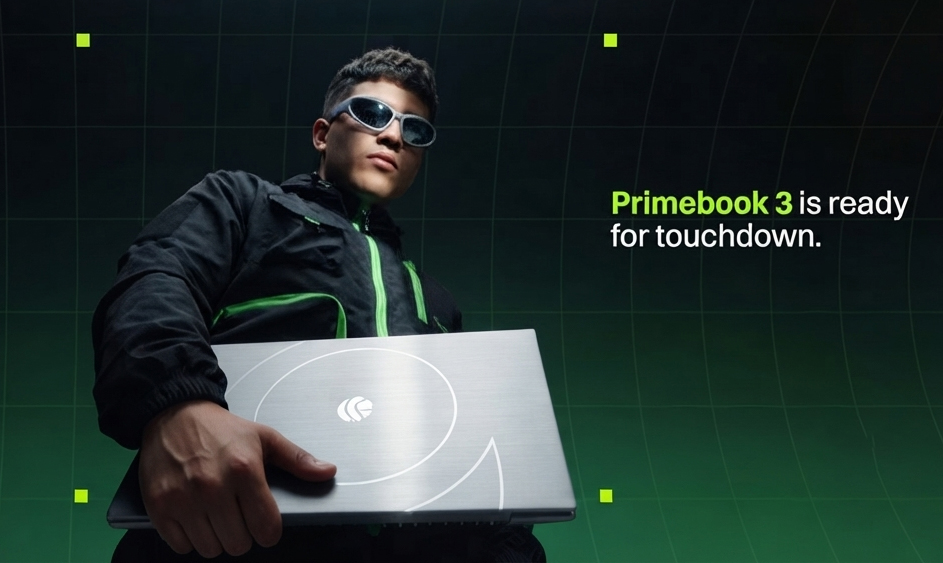
Primebook has unveiled the Primebook 3 Max, bringing a larger 15.6-inch Full HD display and MediaTek's Genio 720 chipset to make student-focused Android laptops more versatile and productive.
Introduction: A Bigger Canvas for Affordable Computing
Indian ed-tech hardware startup Primebook has officially unveiled the Primebook 3 Max, expanding its portfolio of specialized Android-powered personal computers. Building on the success of its compact, sub-12-inch predecessor models, the Primebook 3 Max marks a substantial upgrade in hardware ergonomics and computational muscle. By integrating a full-sized 15.6-inch Full HD display alongside MediaTek's Genio 720 platform, the new laptop aims to deliver a true desktop productivity experience tailored for students, test-takers, and budget-conscious learners without sacrificing power efficiency.
The Core Details: Specs, Architecture, and Features
The standout attribute of the Primebook 3 Max is its transition to a traditional full-sized laptop form factor while retaining its lightweight, ARM-optimized identity. Under the hood, the laptop swaps out generic mobile processors for MediaTek's Genio 720 edge-computing platform, built to manage demanding multitasking workflows while maximizing thermal headroom.
- Display: Up to a 15.6-inch Full HD (1920 x 1080 pixels) IPS panel featuring anti-glare coating and thin side bezels.
- Processor: MediaTek Genio 720 octa-core processor engineered with efficient ARM Cortex cores and dedicated AI compute capabilities.
- Operating System: PrimeOS (proprietary desktop-styled Android OS) offering multi-window app multitasking, customizable taskbar navigation, and native Android app compatibility.
- Memory & Storage: Configurations offering up to 8GB of LPDDR4x RAM coupled with expandable eMMC/UFS internal storage via microSD.
- Connectivity & Ports: Dual-band Wi-Fi, Bluetooth 5.2, USB Type-C for charging and data transfer, full-size USB Type-A ports, HDMI output, and a 3.5mm headphone/mic combo jack.
- Battery Life: High-capacity battery designed to supply all-day battery life (up to 8–10 hours of typical educational usage).
“Our focus has always been to democratize digital education by bridging the gap between smartphones and traditional PCs. The Primebook 3 Max provides the screen real estate and processing headroom students genuinely need for sustained learning.”
— Aman Verma, Co-Founder at Primebook
Context & Market Position
For years, entry-level laptop consumers in emerging markets faced a frustrating dilemma: underpowered Windows notebooks bogged down by Celeron processors and sluggish spinning drives, or limited tablets that lack physical keyboards and true multi-window productivity. Primebook disrupted this paradigm through its PrimeOS platform, transforming the mobile-first Android ecosystem into a familiar desktop interface.
Previously, Primebook focused primarily on compact 11.6-inch machines geared toward primary school children and mobile portability. With the Primebook 3 Max, the brand is targeting higher-education students, competitive exam aspirants, and office workers seeking a secondary productivity device. In this space, it competes directly with entry-level Chromebooks from HP, Acer, and Lenovo, as well as ultra-budget Windows laptops from brands like Chuwi and Thomson. The Primebook 3 Max’s primary advantage over ChromeOS remains the flexibility of the Android ecosystem, native offline application utility, and Primebook’s specialized educational ecosystem integration.
Why It Matters: Bridging the Digital Divide with ARM
The Primebook 3 Max is more than just another budget notebook; it demonstrates how ARM architecture and mobile operating systems can fundamentally redefine budget computing. Traditional Windows laptops priced under ₹20,000 ($250) frequently struggle with system updates, thermal throttling, and battery drain. In contrast, pairing the power-efficient MediaTek Genio 720 with a customized Android kernel yields instantaneous wake times, silent fanless thermal management, and prolonged battery life.
For consumers, moving to a 15.6-inch Full HD screen solves one of the most persistent complaints of ultra-budget devices: cramped displays that induce eye strain during long virtual classes or study sessions. By providing ample space for split-screen multitasking—such as referencing research PDFs alongside a note-taking application or video lecture—the Primebook 3 Max delivers the functional utility of a traditional productivity machine at a fraction of the cost and complexity.
What’s Next: Availability and Ecosystem Expansion
The Primebook 3 Max is slated to hit retail channels across major e-commerce platforms and the brand’s official portal in the coming weeks. Moving forward, observers will watch how Primebook continues to optimize PrimeOS for newer Android releases and larger screen layouts, as well as how legacy PC makers respond to ARM-native desktop alternatives capturing market share in the fast-growing educational hardware sector.